Everything You Need Is Already Within You: How to Build Self-Confidence and Inner Strength

In a world full of opinions, expectations, and constant distractions, it can be difficult to know what we truly want. Learning how to build self-confidence and trust your own judgment can help you become less dependent on outside validation and create a life that feels more authentic and fulfilling.

The idea itself is not new.

The ancient Greeks already understood the importance of self-knowledge. The famous phrase “Know thyself,” associated with Socrates, remains relevant today. The Stoic philosopher Epictetus also taught that our happiness and inner attitude should not depend entirely on things outside our control.

Yet in today’s world, this can be surprisingly difficult.

Living in a World of Constant Outside Influence

Smartphones, social media, and the endless availability of information constantly compete for our attention.

Am I informed enough? Am I keeping up? Am I missing something important?

These questions can quietly become part of everyday life.

The way we live, what we eat, what we wear, where we travel, what we buy, and even what we believe we should want are influenced by the world around us. Often, we don’t even notice how much of our thinking is shaped by other people’s opinions and expectations.

Research also shows that social connection plays an important role in both physical and mental well-being. Supportive relationships can help people feel connected, valued, and emotionally supported. https://greatergood.berkeley.edu/article/item

But other people are not the only outside influence.

We are also affected by our families, friends, coworkers, and sometimes even strangers. A conversation, a comment, or an unexpected encounter can stay with us much longer than we realize.

And few relationships affect us as deeply as romantic relationships. Happy Relationships: 6 Tips for Lasting Love

Why We Should Not Depend Entirely on Others for Happiness

Many of us expect our partners to meet our deepest emotional needs—for love, affection, security, attention, and recognition.

When a relationship is going well, we feel safe and happy. When it is not, the emotional impact can be significant.

And when an important relationship ends, it can feel as though our entire world has fallen apart.

Close relationships are important, and healthy social connections can support both well-being and resilience. At the same time, making another person solely responsible for our happiness can leave us emotionally vulnerable.

The more your emotional stability depends entirely on what another person gives you, the more easily your inner balance can be shaken.

This is why developing a strong relationship with yourself is so important.

Build Self-Confidence by Developing Your Inner Compass

One of the most important foundations of an independent and fulfilling life is a strong inner compass.

This includes self-worth, self-confidence, and self-awareness.

Self-esteem reflects the way we evaluate ourselves and our own value. A healthier sense of self-worth can make it easier to maintain perspective when we experience criticism, rejection, or disagreement.

If your self-worth is constantly dependent on outside approval, even a small criticism can make you question yourself.

But building self-confidence does not mean becoming arrogant or ignoring the opinions of others.

It means learning to trust yourself while remaining open to feedback.

You can listen to other people without allowing every opinion to determine how you feel about yourself.

Know What Truly Matters to You

Another important step is identifying what genuinely matters to you.

Ask yourself:

  • What values do I want to live by?
  • What is truly important to me?
  • What am I willing to compromise on—and what am I not?
  • What kind of person do I want to become?

When you know your own principles, you have a framework for making decisions.

You do not have to follow every trend.

You do not have to agree with every popular opinion.

And you do not have to shape your entire life around the expectations of other people.

Your values can become your personal guideposts.

Choose Your Relationships Carefully

Another important part of inner strength is becoming more aware of the people you allow into your life.

Some people leave us feeling calm, supported, and energized.

Others leave us feeling drained, insecure, or emotionally exhausted.

This does not mean that you should immediately end every relationship when someone disappoints you. No relationship is perfect, and every close connection requires patience and understanding.

However, if a relationship is consistently characterized by disrespect, manipulation, constant criticism, or emotional exhaustion, it is worth taking a closer look.

Healthy social connections should offer support and a sense of belonging—not require you to constantly question your worth. Positive relationships and self-esteem can also reinforce one another over time.

Sometimes self-care means creating more distance and setting healthier boundaries.

Create a Life That Belongs to You

One of the biggest risks in a close relationship is losing your own identity.

Your partner should be an important part of your life—but not your entire life.

Maintain interests, goals, and activities that belong to you.

Create spaces for:

  • hobbies
  • creativity
  • physical activity
  • learning
  • personal projects
  • friendships
  • self-development

Having an independent life does not weaken a relationship.

In many cases, it can make a relationship healthier because two people continue to grow as individuals instead of becoming completely dependent on one another.

A Daily Routine Can Create Inner Stability

A well-designed daily routine can also provide a sense of stability.

If your entire day depends on how motivated you feel in the morning, your mood can easily control your behavior.

Structure can help you stay connected to your priorities even on difficult days.

This does not mean that every hour must be planned.

It means creating a few reliable habits that support your physical and emotional well-being.

For example:

  • regular sleep
  • physical activity
  • focused work
  • time for personal interests
  • relaxation
  • meaningful social connections
  • time away from your smartphone

The CDC also recommends making meaningful social connections part of everyday life and reducing distractions that interfere with real-world connection.

7 Practical Tips for a More Independent and Fulfilling Life

1. Write down your five most important life principles

Think about the values you are not willing to compromise on.

For example:

  • being honest with yourself
  • protecting your health
  • staying physically active
  • continuing to grow as a person
  • building meaningful relationships

Your principles can help guide your decisions when life becomes confusing.

2. Take an honest look at your self-worth

Ask yourself:

How much does my self-esteem depend on the approval of other people?

If criticism, rejection, or comparison strongly affects the way you see yourself, working on your self-worth can help you become more emotionally independent.

3. Examine your expectations in romantic relationships

Ask yourself:

Do I expect my partner to meet all of my emotional needs for love, attention, validation, and security?

A loving relationship can provide closeness and support. But it should not be the only source of your identity or emotional stability.

Learn to give yourself compassion, attention, and recognition as well.

4. Build parts of your life that belong only to you

Maintain interests and goals that are independent of your partner, family, or social circle.

A fulfilling life should have more than one source of meaning.

5. Pay attention to how people make you feel

You do not need to judge every relationship based on a single interaction.

Instead, look for patterns.

Do certain people consistently leave you feeling respected and supported?

Or do you regularly feel anxious, drained, or diminished after spending time with them?

Healthy boundaries can be an important form of self-respect.

6. Create a realistic daily routine

Build a routine that supports your well-being even when you do not feel particularly motivated.

Set realistic priorities for:

  • sleep
  • movement
  • work
  • relaxation
  • personal interests
  • social connection

Consider creating regular periods without your smartphone so your attention is not constantly controlled by outside information.

7. Write down your vision for your life

Where would you like to be in five or ten years?

What kind of life would make you feel proud?

What experiences would you like to have?

What kind of person would you like to become?

Your vision does not need to be a rigid plan.

It can change as you grow.

But having a sense of direction can help you make more conscious decisions.

The Most Important Relationship Is the One You Have With Yourself

You cannot control what other people think about you.

You cannot prevent every relationship from ending.

And you cannot control everything that happens in the world around you.

But you can learn to choose how you respond.

The stronger your self-worth, self-confidence, and inner compass become, the less dependent you are on constant approval from the outside world.

A fulfilling life does not mean living without other people.

It means being able to love, connect, and build meaningful relationships without completely losing yourself in the process.

Everything you need may not always come from within—but your ability to build a meaningful life begins there.

Happy Relationships: 6 Tips for Lasting Love

How to Build a Happy Lasting Love

Healthy relationships are one of the strongest predictors of happiness, emotional well-being, and even a longer life.

Research consistently shows that people with strong social connections tend to be healthier, happier, and more resilient throughout life’s challenges.https:///www.gottman.com

These connections include family, friends, colleagues and neighbors. Romantic relationships also play a significant role. For most people, life includes several relationships—from first love and long-term partnerships to marriage and sometimes a love affairs that are also part of reality.

Unfortunately, not every relationship has a happy ending. High divorce and separation rates remind us that love alone is not always enough.

When a relationship ends, many people experience grief, anxiety, loneliness, and emotional distress. Some eventually avoid commitment altogether, while others settle for casual relationships because they fear being hurt again.

Yet few experiences are more fulfilling than being loved and accepted for who you truly are.

Feeling emotionally safe, deeply connected, and able to trust another person creates a sense of security that contributes enormously to overall happiness.

Why Healthy Relationships Matter

Although most of us long for lasting love, there are no guarantees in any relationship. Your partner may not share your expectations, emotional needs, or long-term goals.

Psychology also teaches us that romantic relationships often become a mirror of our inner world. Unresolved emotional wounds, low self-esteem, childhood attachment patterns, or the need for validation can strongly influence how we choose partners and behave in relationships.

Sometimes we look to another person to fill emotional gaps that only we can heal ourselves.

The Most Important Relationship Is the One with Yourself

The quality of your romantic relationship often reflects the quality of the relationship you have with yourself. The power of self-love

Before asking whether someone is the right partner for you, consider asking yourself:

  • Am I looking for love because I don’t truly value myself?
  • Am I afraid of being alone?
  • Do I mistake emotional drama for passion?
  • Am I seeking excitement instead of genuine intimacy?

These questions can help you better understand your motivations and prevent unhealthy relationship patterns.

Know When to Stay—and When to Walk Away

Every relationship experiences challenges. However, staying in a relationship that consistently leaves you unhappy, emotionally drained, or disconnected can cost you valuable time, energy, and self-confidence.

A healthy relationship requires honesty, mutual respect, emotional safety, and a willingness from both partners to grow together.

It is equally important to recognize when your emotional needs cannot be met—not because your partner doesn’t care, but because they may simply be unable to provide what you need.

Developing emotional awareness allows you to make healthier relationship decisions instead of being driven solely by hope or fear.

6 Tips for Building a Happy Relationship
1. Build a healthy relationship with yourself first.

Self-love and self-respect create the foundation for every healthy partnership.

2. Know what you are looking for.

Identify the values, lifestyle, life goals, and personality traits that truly matter to you.

3. Understand your emotional needs.

Be honest about what makes you feel loved, supported, respected, and emotionally safe.

4. Make sure your partner can meet those needs.

Compatibility is about much more than chemistry—it includes emotional maturity, communication, and shared values.

5. Pay attention when things change.

Don’t ignore recurring problems or dismiss your feelings. Address issues early through honest communication.

6. Have the courage to leave unhealthy relationships.

Walking away can be painful, but remaining in a relationship that consistently harms your well-being often causes even greater suffering.

Final Thoughts

A happy relationship doesn’t begin with finding the perfect partner.

It begins with understanding yourself.

The more clearly you know your values, boundaries, and emotional needs, the more likely you are to build a relationship based on trust, respect, emotional intimacy, and genuine love.

Healthy relationships are not built by chance—they are built through self-awareness, communication, and conscious choices every day.

Hormones and Biological Age in Women: How to Slow Down Aging Naturally

Hormones and biological age in woman are closely connected. Many women feel older than they actually are due to stress, fatigue and hormonal imbalance.

Many women notice symptoms like fatigue, weight gain, low energy, or mood swings — all signs that your biological age may be increasing faster than it should.

Biological Age: 7 Proven Ways to Influence it Naturally

Lowering your Biological Age means improving how your body actually functions — not just how many birthdays you’ve had. Many people feel tired, low on energy, and older than they really are. The good news? Your biological age is not fixed — you can actively improve it.

If you want to reduce your Biological Age, longevity products are becoming increasingly popular for their ability to support the cellular repair.

🧬 What influence the aging process

Your biological age reflects how well your body is functioning on a cellular level.

t is influenced by:

  • Cellular health
  • Energy production (NAD+)
  • Inflammation levels
  • Hormonal balance

What Science Says About Aging 

Research from the Harvard T.H. Chan School of Public Health shows that to feel younger is strongly influenced by lifestyle factors such as nutrition, physical activity, and overall cellular health. 👉 Harvard T.H. Chan School of Public Health – Biological Aging Research

👉 This means you could be 40 years old chronologically but have a biological age of 30 — or 50. Biological Age: How to Lower it Naturally (Backed by Science)


How you can stay young longer
🔥 1. Boost NAD+ Levels (The Key to Anti-Aging)

One of the most important factors in aging is NAD+, a molecule responsible for energy production and cellular repair.

As you age, NAD+ levels naturally decline.

🥗 2. Optimize Your Diet

Your diet plays a major role in slowing down aging.

Focus on:

  • Antioxidant-rich foods (berries, vegetables)
  • Healthy fats (omega-3)
  • Reducing sugar and processed foods

🏃‍♂️ 3. Exercise for Cellular Rejuvenation

Regular physical activity improves mitochondrial function — the “powerhouses” of your cells.

Even:

  • 20–30 minutes daily walking
  • Strength + cardio training 30 minutes, 2 times a week

can significantly lower your biological age.


😴 4. Improve Sleep Quality

Sleep is one of the most underrated anti-aging tools.

During sleep:

  • Cells repair themselves
  • Hormones balance
  • Stress decreases

🧘‍♀️ 5. Reduce Stress

Chronic stress accelerates aging dramatically.

Helpful strategies:

  • Meditation
  • Breathwork
  • Time in nature

💊 6. Use Targeted Supplements

Some supplements may support longevity:

  • NMN / NR
  • Resveratrol
  • Omega-3
  • Magnesium

👉 Quality matters — always choose well-reviewed products.


💡 7. Mindset & Lifestyle Matter

Your mental state has a powerful impact on aging.

People with:

  • Purpose
  • Strong social connections
  • Positive outlook

tend to age slower.


📊 Conclusion

Lowering your biological age is not about magic — it’s about consistent lifestyle choices.

By improving:

  • Nutrition
  • Movement
  • Sleep
  • Stress levels

you can feel younger, healthier, and more energetic.

Letting go means freedom – why finding inner peace changes everything

Letting go means freedom.
 Yet, for most of us, it’s the hardest thing to do. We cling to old thoughts, outdated expectations, past hurts, and people who no longer serve our growth.
But here’s the truth: when you master the art of emotional release, you finally clear the wreckage to make room for lightness, clarity, and true inner peace.
Even in the field of psychology, “letting go” is recognized as a cornerstone of mental health. Example Psychology Today – Letting Go
Why We Struggle to Release the Past
It’s not just you—our brains are practically wired to hold on. Several subconscious factors keep us stuck:
  • The Need for Approval: We are social creatures. We crave harmony and often fear that letting go will disrupt our environment or disappoint others.
  • Conflict Avoidance: Confronting issues, especially with loved ones, is exhausting. We often choose a mediocre compromise over the “pain” of a clean break just to save energy.
  • The Comfort Zone Trap: We cling to habits—and even our anxieties—simply because they are familiar. Your brain loves the path of least resistance. It wants to run on autopilot, even if that autopilot is heading in the wrong direction. How to educate your brain
Letting Go means Freedom: Why Inner Release is a Total Game-Changer
The Cost of Holding On vs. The Power of Freedom
Staying stuck in old patterns leads to one thing: stagnation.
Life is defined by constant movement. If you aren’t flexible enough to adapt, you get left behind. Letting go is freedom because you finally stop “inner-fighting” with reality. You stop resisting change and start embracing new paths. Think of it as a total system upgrade for your mind and your personal narrative.
When you identify your “emotional baggage” and finally drop it, the relief is instant. It’s that profound feeling of setting down a heavy suitcase after a long trek. That’s when you unlock your true potential for creativity and renewal.
Your Step-by-Step Guide to Inner Release:
  1. Define the Change: Write down exactly what you want to transform in your life.
  2. Audit the Situation: What are the pros and cons of staying where you are versus moving on?
  3. Identify the Anchor: What specifically is keeping you tied to this current situation? What are you afraid to lose?
  4. Audit Your Circle: Which people are you holding onto who are actually draining your energy?
  5. Take Action: Create a 30-day “Letting Go” plan. What is one small thing you can release each week?
What is one thing you’re choosing to leave behind today?


What does it mean to love truly?

Today is Christmas Eve. In the Christian World, it is time of reflection, reconciliation, and love.
Human beings cannot exist without love. After basic needs and the need for security, the need for love is one of the most important.
But what does it mean to love someone or something?
That’s one of the most difficult questions, and it raises many more.
Should we attach conditions to our love? What are we ready to give? Where does self-love come into play?
My answers are best viewed from a perspective of balance.
My opinion is that we should attach conditions to our love, because it is precious. The exception is the devoted and unconditional love for one’s own children.
When we love, we should be prepared to give a lot, because everything comes back to us. If it doesn’t come back, we should let it go.
I see self-love as paramount. This has nothing to do with selfishness, but is part of self-care and the foundation for the ability to love others. The power of self-love
Love has a second side – the side of being loved. Here, the right balance is especially important. Because in constantly striving to do things to be loved as long and intensely as possible, we lose a lot of energy and feel burned out.
One of the most important foundations for successful relationships is feeling loved for who you are, without having to do anything special. But that doesn’t mean you shouldn’t work on yourself or your relationships.
Here are my tips for love:
– Love yourself and take good care of yourself. Only then can you give love to others.
– Look closely at who you give your love to and how they are treated.
– Treat your resources of love carefully, because they are not endless.
– Make a conscious decision to love or not. Yes, it’s difficult, but it’s possible.
– If you have decided to love, then love with all your heart and don’t overthink it.
– Small gestures of love achieve far more than many words if you want to maintain your relationships.
Voilá!


Is a vegan nutrition healthier?

Eating vegan is considered chic and trendy.
The main arguments are: animal welfare, environmental protection, and better health. I’ve met people who think they’re superior because they eat vegan.
But I’ve also met those who felt weak and drained while on a vegan diet. As you can see, opinions are divided on this topic.

Here view my favorite vegan protein shake on Amazon.com

Disclosure: this post contains affiliate links. As an Amazon Associate, I may from qualifying purchases. There are no extra costs for you.

It is undisputed that a plant-based diet has many advantages. Primarily because of the vitamins and secondary micronutrients it contains, which have a positive effect on health. 

The presence of trace elements and low fat content are further advantages. Plant-based oils are also excellent for maintaining healthy and elastic blood vessels.
I would like to examine three controversial aspects in more detail.
– Animal welfare:

To that end: humans have been omnivores since the Stone Age. They are not predators like lions, which only eat meat, nor horses, which exclusively eat grass and hay. The structure of human teeth proves this.

If humans did not eat animals and the natural law of “eat or be eaten” in the animal kingdom did not apply, there would be uncontrolled reproduction, disease, and competition among animals.

Furthermore, the land used to grow corn and soy as a source of plant-based protein for feeding the world’s population displaces many animal species, which then have fewer offspring.

– Environmental protection:

It is true that factory farming produces CO2, which contributes to further global warming. Figures show that approximately 5% of total human-caused CO2 emissions are attributable to meat production.

Feeding the animals brown algae would drastically reduce this amount. Natural animal husbandry on pastures and organic farms significantly lowers CO2 emissions.

– Improved health:

Note: A purely vegan diet can lead to a deficiency in B vitamins, which must be compensated for with supplements.

The biological efficiency of purely plant-based protein is around 50%, while that of animal protein reaches 70-80%. This means that of every 100 grams of protein consumed, 70 grams are absorbed and utilized by the body. An exception is the chicken egg, which is utilized by the body in its entirety.

Another point to consider: The trace element iron is also found in plants, but it is not absorbed as efficiently as iron from red meat. Iron is essential for the formation of red blood cells.

Therefore, I believe that the healthiest way to eat is through variety. My Anti-Aging Recipes — Fast and Healthy

Meals should contain foods of plant and animal origin – in a ratio of approximately 3:1. This includes sufficient protein, about 1 gram per kilogram of body weight, plant-based fats, and nuts.

Here are my 10 tips for a healthy nutrition:

1. Fresh fruits and vegetables are a must: a salad every day, a piece of fruit with every meal.

2. Once a week, eat a 200-gram steak of beef, veal, or lamb. Pork should be eaten in moderation due to its arachidonic acid content, which promotes inflammation.

3. Eat deep-sea fish twice a week. It’s high in protein and contains iodine, which is essential for thyroid health.

4. Eat poultry once a week: It’s high in protein and low in fat—without the skin.

5. Lightly steamed vegetables as a side dish. A small amount of potatoes now and then.

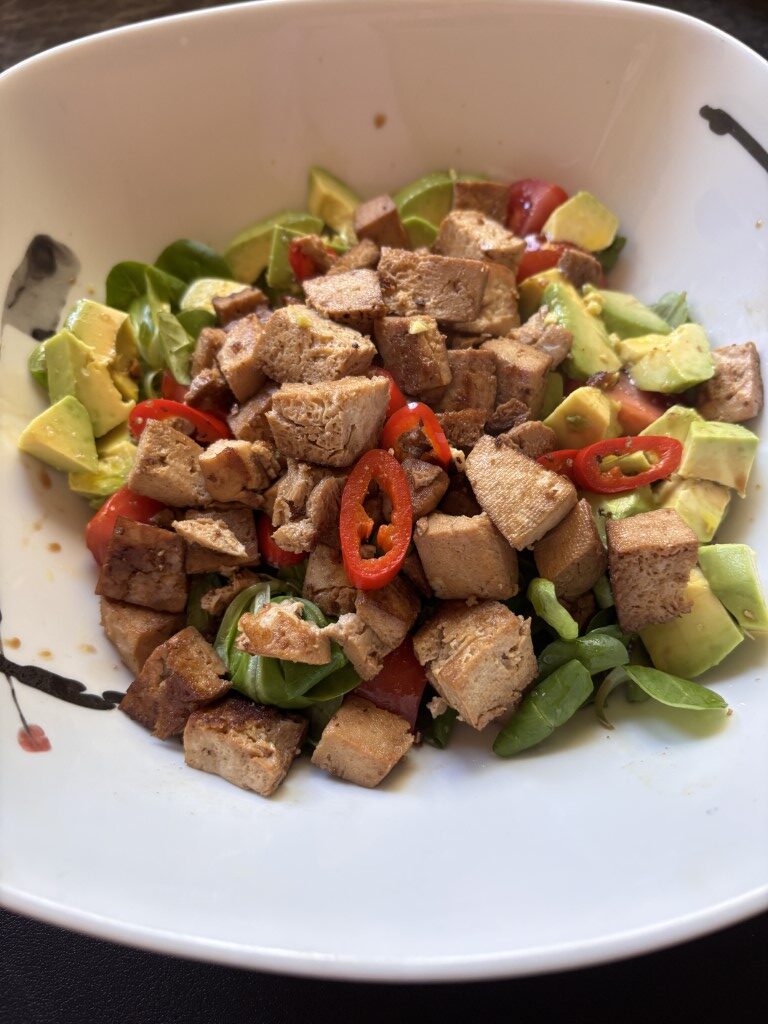
6. Once a week, have a tofu dish with rice and stir-fried vegetables.

7. Use plant-based fats daily, except for palm oil. Add them to your salad or simply spoon them on.

8. Eat a handful of nuts every day.

9. Keep cooking times as short as possible. 15 minutes is ideal.

10. If pizza, pasta, or chocolate are tempting, that’s no problem. They’re fine once in a while. But then, enjoy them properly!

Voilà!

Disclosure: This post contains affiliate links. As an Amazon Associate, I earn from qualifying purchases.There are no extra costs for you.

How to educate your brain

Do you know the saying: “control your thoughts, fhan they become your words, control your words, than they become your actions, control your actions, than they become your destiny?
Who wants to have an unfortunate fate? “But it all starts with thoughts. That makes them not harmless and  unimportant to simply let them drift.
Thoughts are especially powerful when our minds want to take a nap, especially at night. We wake up and are at their mercy.
Then a harmless incident becomes a threatening scenario, a fleeting remark from a neighbor becomes a powerful prophecy.
There’s only one thing that helps here: trying to slow things down with a decisive “Stop.”
Things look better during the day – but only seemingly. Because these thought visitors can spoil our mood. Or improve it.
The good news is, it’s in our hands.
Studies show that inner affirmations have enormous power and influence our emotions. However, dominating them requires practice and consistent control of our thoughts.
There’s no such thing as thoughtless.
The brain works like a perpetual motion machine. Even when we think we’re relaxing on the beach, gazing into the distance. Admittedly, in a very pleasant situation. But the brain is by no means relaxing here!
People have sometimes even come up with magnificent discoveries or formative works during such beach visits.
The key is to educate our brain, like a child who wants to do whatever it wants. But how?
Many thoughts are the product of the beliefs we’ve acquired over the course of our lives:
“It’s too late anyway!”, “I’ll never be able to do that!”, “I’m not pretty enough!”, “I’m not good enough!”
  Who hasn’t heard these phrases suddenly pop into our heads? It’s important to question and correct these thoughts, even if they seem true at first glance.
The truth is what our brain produces.
Here are the 6 parenting approaches for your brain:
1. Ban the words “not” or “can’t” from your brain: the sentence “I can’t do it” becomes “I’ll manage it.” the sentence “I don’t want to do it” becomes “I want to do something differently.”
2. Motivate your brain in this direction: think: “I want to do this or that on topic X today!” before it does.
3. Let your brain think empowering phrases like “I am strong enough!”, “I am beautiful enough!”, “I’ve accomplished a lot, I can do this too!” It’s best to say these phrases out loud in front of a mirror.
4. If your brain makes itself known at night, force it to calm down with short commands like “Stop” or “Later.”
5. Negative scenarios should be postponed until daytime, questioned, and resolved only in the light of day.
6. Sometimes it helps to simply say to your brain lovingly: “Dear brain, I’ve let go of that a long time ago!”
Voilá!


How much sports do we need really?

When I browse the Instagram profiles of fitness gurus over 50, I suspect I’m doing something wrong.
The steely bronze bodies with mountains of muscles, who spend hours every day in the gym on heavy equipment or hike mysterious trails in the great outdoors, impress me greatly.
I have great respect for people who put so much effort and time into their fitness. However, I’m constantly thinking that they probably don’t have time for anything else in their lives.
I recently saw a report on TV about a well-known fitness influencer.
It was about her career, how it ruined her and how she struggled with significant
health problems. Of course, this isn’t a mandatory scenario.

But how much exercise do we really need to stay healthy—fit and productive—for as long as possible?

The fact that you can still look good is a bonus, but not an explicit goal. I thought about this question thoroughly and tried out many models.
My well-being, good sleep, and performance served as benchmarks. This is how you sleep well!
 First, I realized that a daily exercise session of about 45 minutes, consisting of three-quarters intensive cardio and one-quarter strength training, was counterproductive due to the insufficient recovery time.
I was tired, unfocused, and my performance was at rock bottom.
Afterward, I took a rest day between training sessions. Short walks, stretching,
morning exercises, and Tai Chi sessions remained unaffected.
I felt better, and my performance parameters improved. What about the fun factor in sports – is it necessary?
A resounding “yes”!
Because a sport that’s fun boosts motivation and is good for the soul. Therefore: find your favorite sport that you’re passionate about. Once a week would be enough.
Then even the mandatory exercises in the gym or on your mat at home will be easier.
No matter what sport you practice, an important aspect is training your body’s flexibility and suppleness.
You can achieve this with stretching sessions and expanding the range of motion
of your joints.
Here are my 6 tips for healthy exercise that’s fun and doesn’t overtax your muscles:
1. Twice a week, 25 minutes of cardio and 20 minutes of strength training with weights or resistance bands.
2. One to two times a week, do your favorite sport like badminton, soccer, dancing, paddling, sailing, or something else.
3. Daily 5-10 minutes of morning gymnastics, right after getting up, preferably in your pajamas by the bed, with stretching sessions and yoga elements, such as the morning salutation.
4. Five minutes of Tai Chi outside before breakfast. A terrace or balcony also serves this purpose.
5. A daily 20-30 minute brisk walk in the fresh air during daylight hours.
6. Every other day, 10-15 minutes of intensive stretching exercises for the major joints. There are examples from Liebscher & Bracht on YouTube.
Voilá!


Reality or Fantasy?

What makes us happy? A very good question to which there are certainly many answers.

A thousand things can make us happy, from a cup of good coffee in the morning to a hug from a loved one.

One thing seems certain: only things that really exist or really happen have real emotional value for us.

On the other hand, we consider the world of dreams or fantasies to be a waste of time and a disappointment if it does not correspond to reality.

But – Is that really the case?

The fact is – our brain cannot clearly distinguish between reality and fantasy.

It experiences ideas just as intensely as real events. An example: imagine a lemon that you would like to bite into. You immediately feel the fragrant peel and the sour taste of the juice on your lips. Your saliva starts flowing. You enjoy the whole process, assuming you’ve had this experience before.

As a result, you are also able to really experience certain experiences and emotions with the help of your imagination. This phenomenon was discovered scientifically a long time ago and is used in psychology. There are mental training programs that help athletes or patients feel better.

Everyone can use the power of imagination.

Are you not 25 years old anymore?
Then close your eyes, take a deep breath and imagine for a moment that it is you! What would happen? How would you feel? Your back straightens. You take one deep breath after another, you would feel energy and drive.
Have you always wanted to be a king or queen?
Then put on your most beautiful suit or dress, walk a few steps like a king or queen, greet your imaginary subjects with dignity. How does that feel? Are you king or queen for this moment?
Does that sound stupid?  You would never do that?

Are dreams of no use? Just the sole acceptance of reality?

It would be a shame to give up dreams! This would result in the loss of a very useful resource – the healing power of our imagination. Because with your imagination you can imagine and live through anything, almost like in reality.  Because needs that are not fulfilled eat away at our soul.

Here are my 5 tips for successful dreaming:

– Allow yourself to dream!
– Accept that some things remain just a dream and that’s a good thing!
– Perform personal, regular dream rituals by finding a quiet place or starting one after wakingup.
– Imagine your desired constellations as precisely as possible: what you want to feel, see or smell and how you feel.
– Enjoy the moment, know that this is good for your body and your soul, regardless of whether the dream comes true or not!
Voilà!
 
 
Protected By
Shield Security